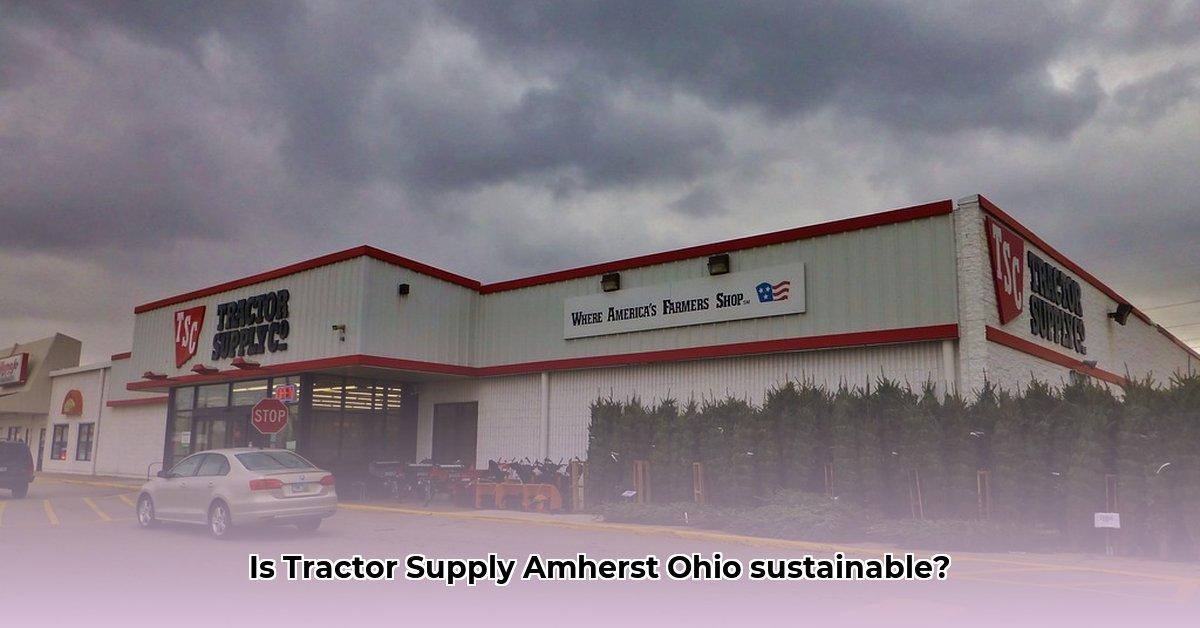
Amherst, Ohio boasts a rich agricultural heritage, but the role of Tractor Supply (TSC) in shaping its sustainable future remains unclear. This article explores TSC's influence on local farming practices, examining both its potential contributions and limitations in supporting environmentally conscious agriculture. While TSC's presence suggests a connection to the local farming community, concrete evidence of its direct impact on sustainable agriculture requires further examination. For heating options, see TSC's wood stoves.
What We Know (and Don't Know) About TSC's Impact
TSC's Amherst location provides readily accessible resources for local farmers. However, crucial details regarding its direct support for sustainable farming practices are currently unavailable. Key questions remain unanswered: What sustainable farming products does the store offer? What are their sourcing practices (local, sustainable, or otherwise)? Does TSC actively engage with farmers employing environmentally friendly methods? This lack of information hampers a comprehensive assessment.
Assessing TSC's Potential Influence on Key Stakeholders
To understand TSC's potential impact, we must analyze its influence on various stakeholders. The following table summarizes potential positive and negative effects:
| Stakeholder | Potential Positive Impacts | Potential Negative Impacts |
|---|---|---|
| Local Farmers | Increased access to tools and supplies, improved efficiency. | Potential reliance on unsustainable products, lack of direct support for sustainable practices. |
| Tractor Supply | Enhanced brand image, increased customer loyalty. | Failure to establish clear sustainability goals, potential for negative environmental consequences. |
| Local Government | Economic stimulus, community growth. | Unclear environmental repercussions, missed opportunities to promote sustainable practices. |
| Consumers | Wider product selection, potential access to sustainable options. | Risk of "greenwashing," difficulty verifying sustainability claims. |
Uncovering the Truth: A Multi-Faceted Approach
To gain a clearer picture, several steps are necessary:
Product Sourcing Investigation: Tracing the origin and production methods of TSC's products will reveal the sustainability of its supply chain. This investigation will determine the proportion of locally sourced, sustainably produced goods.
Farmer Interviews: Direct engagement with local farmers is crucial. Understanding their purchasing habits and experiences with TSC will provide valuable insights into the store's practical impact.
Third-Party Environmental Audit: An independent environmental audit would offer an objective assessment of TSC's environmental footprint and identify areas for improvement. This provides much-needed transparency.
Community Dialogue: Open communication between TSC, farmers, and the broader community is essential for collaborative solutions and mutual understanding.
Key Findings and Actionable Recommendations
While initial research suggests limited publicly available data directly linking TSC's Amherst location to specific sustainable agricultural initiatives, evidence suggests potential indirect contributions. A deeper dive is needed to fully understand the impact.
Key Takeaways:
- Limited Direct Evidence: Currently, there's minimal publicly available information demonstrating direct support of sustainable farming practices by the Amherst TSC store.
- Potential Indirect Impact: The store's presence and access to supplies may still indirectly support sustainable efforts by providing necessary resources to local farmers.
- Further Investigation Critical: A more comprehensive investigation incorporating the steps outlined above is essential for a complete analysis.
Actionable Steps:
- Conduct Farmer Surveys: Survey local farmers about their purchasing habits at TSC and their adoption of sustainable practices. Target a statistically significant sample size to obtain reliable results.
- Analyze TSC's Product Catalog: Carefully examine TSC's product catalog (online and in-store) for items explicitly marketed or labeled as promoting sustainable farming practices. Note the proportion of such items compared to conventional alternatives.
- Collaborate with Local Organizations: Partner with local agricultural organizations and environmental groups to gather data and insights on the store's impact on sustainable efforts in Amherst.
- Request Transparency from TSC: Request information directly from Tractor Supply Company regarding their sustainability initiatives in Amherst, Ohio.
The ultimate assessment of TSC's contribution to sustainable farming in Amherst necessitates a more thorough examination. Transparency and collaboration among all stakeholders are crucial for accurate evaluation and the development of effective strategies to promote sustainable practices within the community.